A clean anilox roll and a working anilox roll are not always the same thing.
Every site with an anilox cleaning schedule can tell you when the last clean happened. Fewer can tell you what it actually recovered, and fewer still would think to check whether the clean itself did any harm.
Laser cleaning has become popular for good reason. No chemicals, no consumables, and a lighter environmental footprint than solvent-based methods. The reputation is deserved. What it does not guarantee is that the anilox comes away undamaged, and the problem is more common than most in the industry realise. What follows are two cases investigated directly by Troika, at separate sites, where finding the real cause took more work than expected.
Caught in an expensive loop
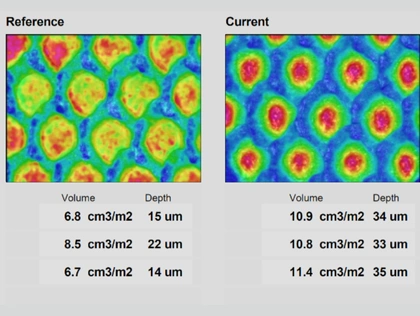
What do you do when a freshly cleaned roll comes back with cell depths deeper than they should be, and a volume higher than the screen count allows? That’s exactly what happened at one site. The first assumption was that the AniCAM, the device used to measure the anilox, was being used incorrectly. Troika’s support desk quickly joined an online session and worked through a series of scans with the operator, checking lighting, technique and settings in turn. The device, it turned out, was being used correctly.
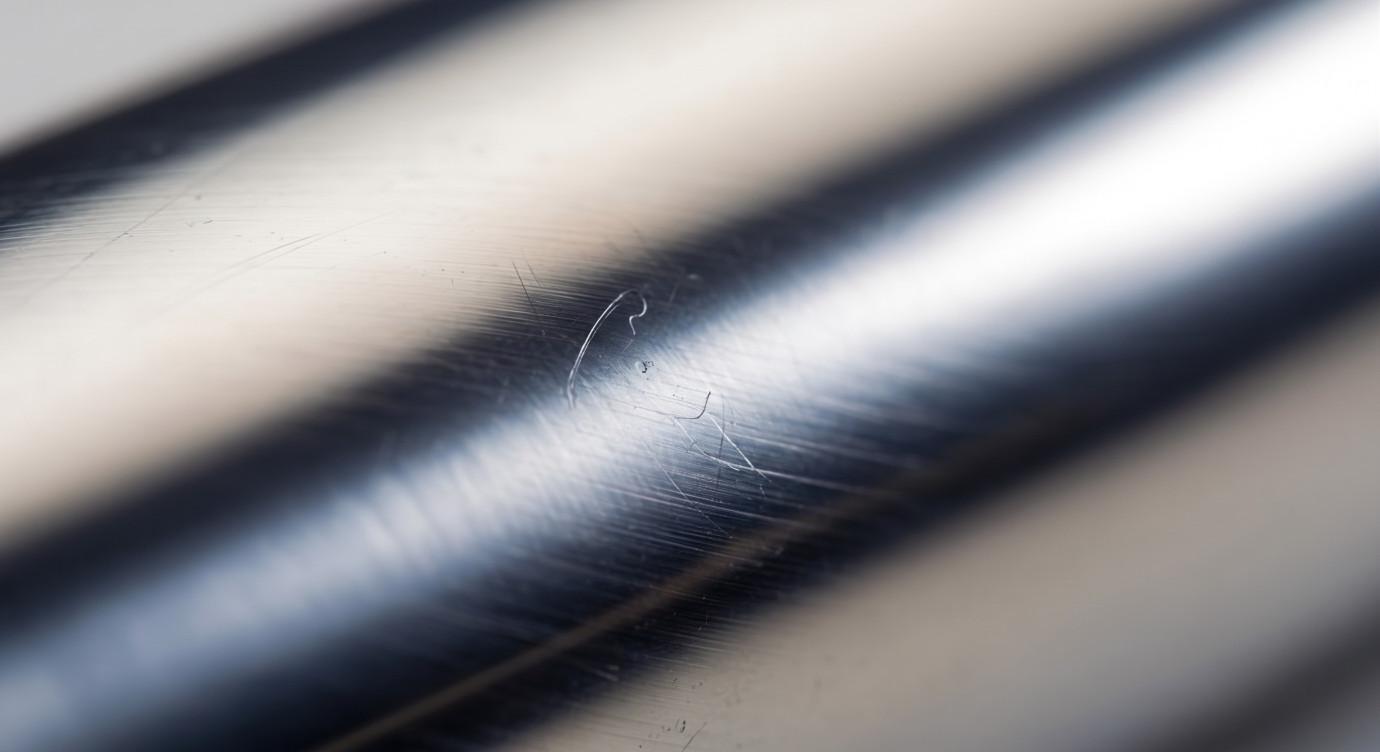
The customer then sent the roll for closer inspection. On arrival, it was clear the problem was neither dirt nor ordinary wear. The surface had spiral scoring running across it, a pattern that has turned up before on laser-cleaned rolls. It is caused by the laser running at too much power, or by the beam pausing for a fraction of a second each time it changes direction during a cleaning pass, burning a line into the ceramic as it goes.
That’s what made this easy for the printer to get wrong. Cleaning, after all, is not supposed to make matters worse. Yet every cycle cost money and downtime and solved nothing, because the fault was never dirt to begin with. The roll was stuck in a loop that cleaning could never break, because nobody had identified that cleaning was the cause, not the solution.
How repeated cleaning quietly destroyed a roll
A second case, at a European converter, showed the danger of following a cleaning schedule too rigidly. The same roll, scanned after three laser cleaning cycles and again after nine, showed that the damage had not reset between cleans but had become worse. A mark that was barely visible after the first few cycles had become significant, structural damage to the cells by the ninth.
The cause was a cleaning process run to a fixed timetable, rather than one that responded to the roll’s actual condition.
Once the ceramic itself has changed, cleaning it again simply repeats whatever caused the damage in the first place. The only remedy is to return the roll to the manufacturer for resurfacing and re-engraving. An expensive process, and one that leaves the roll out of rotation in the meantime.
Not an isolated incident
Neither case above is an isolated one. The same pattern, surprising extended depth readings and visible surface damage under magnification, turns up at other sites too, and often the underlying cause is the same.
Why measurement is the only defence
The true cost in both cases wasn’t just the final bill for resurfacing. It was every cycle before that, cleaned again and again, paid for each time, and achieving nothing, because the roll was never as dirty as it looked. Nobody could see this by walking past the roll, or by looking at a print sample, since damage and dirt look identical to the eye. It took an actual comparison of cell geometry, using the AniCAM, to find the truth.
This is why measurement should be built into any cleaning routine, whatever method is used. Not just to confirm that a clean has recovered the volume it should, but to catch a method that is slowly damaging a roll, long before a resurfacing bill is what finally gets someone’s attention.
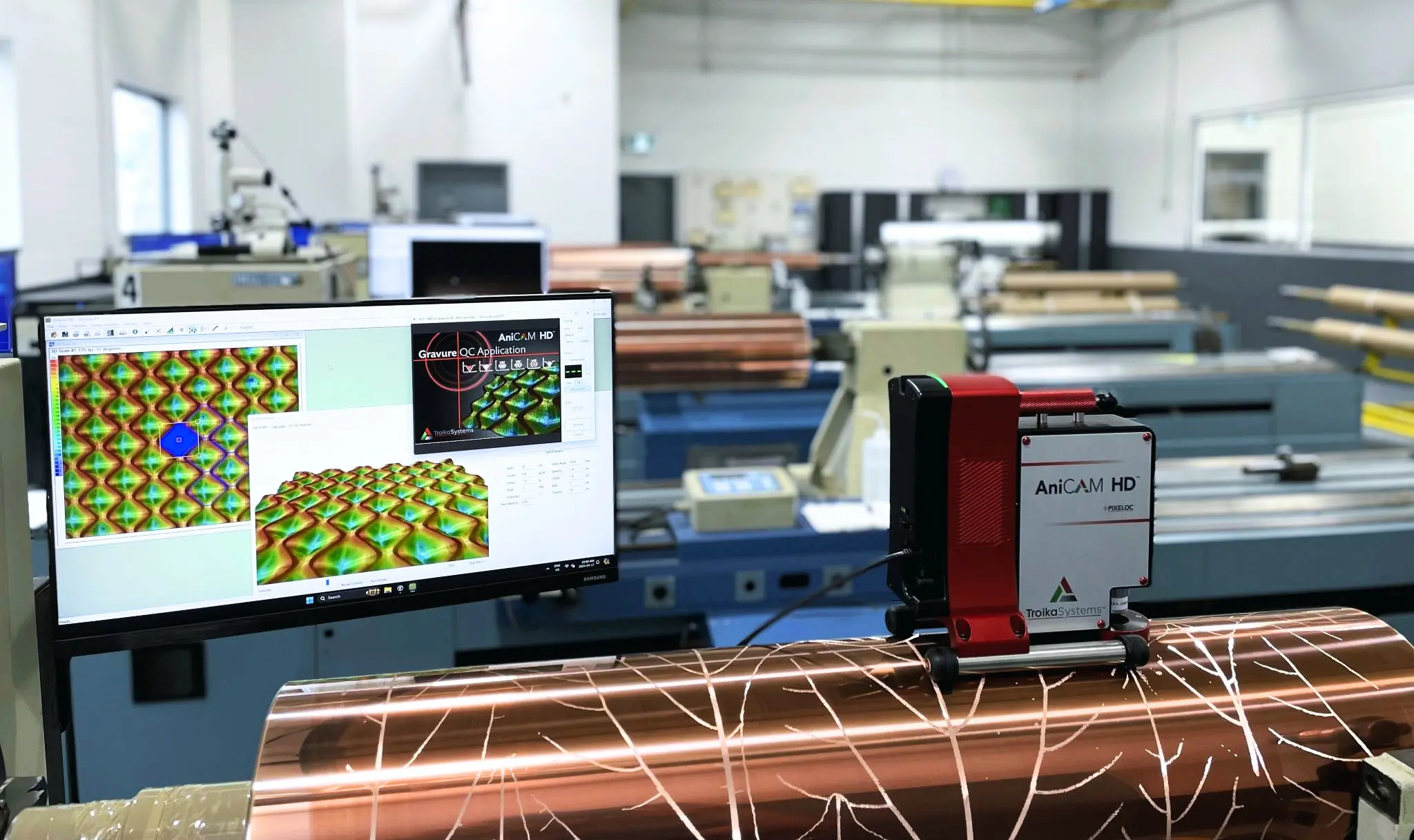
Troika has built this into automatic cleaning report software. Scan the roll dirty, scan it clean, and the two are set side by side, with the volume and depth difference calculated automatically, in real numbers. It exists for converters checking their own cleaning process, and equally for cleaning companies who want to prove theirs worked.
Next time a roll returns from cleaning, the question is worth asking: do you actually know what was done to it, or are you simply hoping? A scan takes seconds. Finding out the hard way costs a lot more.